In the vast and ancient landscape of Indian literature, few figures are as legendary and enigmatic as the poet Bhasa. Mentioned by literary giants like Kalidasa—who called him a “great poet” (Mahakavi)—Bhasa’s name was synonymous with brilliance and dramatic innovation. Yet, for centuries, his plays were thought to be lost forever, a mere ghost of a memory, known only through references in other works.
He was a poet whose fame had survived, but whose words had not, leaving a significant void in the understanding of Sanskrit drama’s historical evolution. Scholars could only speculate on his immense talent, relying on a reputation that had transcended time without any tangible evidence to back it up.
The story of Bhasa’s rediscovery is as dramatic as one of his own plays. It was in 1910 that a determined scholar named Mahamahopadhyaya T. Ganapati Sastri began a dedicated search for ancient texts. His relentless quest led him to a small village in Kerala, where he stumbled upon a bundle of old palm-leaf manuscripts in a traditional library. These manuscripts were written in the old Malayalam script, but to Sastri’s astonishment, the language was classical Sanskrit.
After painstaking work of transcription and translation, he realized what he had found: a collection of thirteen complete plays attributed to a poet named Bhasa. The literary world was electrified; the discovery was monumental, akin to unearthing a lost Shakespeare or Homer. A missing piece of the classical canon, a foundational text of Indian theatre, had been returned to the world after centuries of silence.
What made Bhasa’s works so significant was their unique style and bold, convention-defying themes. Unlike the more polished and ornate dramas of later playwrights, Bhasa’s plays are characterized by their raw emotion, simple and direct language, and swift, natural dialogue. This simplicity allowed for a powerful focus on the human element, giving his characters a depth and vulnerability that was revolutionary for its time.
A true pioneer, Bhasa was audacious enough to use tragic elements and even dared to show death on stage—a practice that was considered strictly taboo in classical Sanskrit theatre. This defiance of a major theatrical rule underscored his commitment to authentic and powerful storytelling, as he masterfully explored themes of war, love, and human fallibility. His characters’ struggles and triumphs resonated with audiences because their emotions were palpable and unadorned.
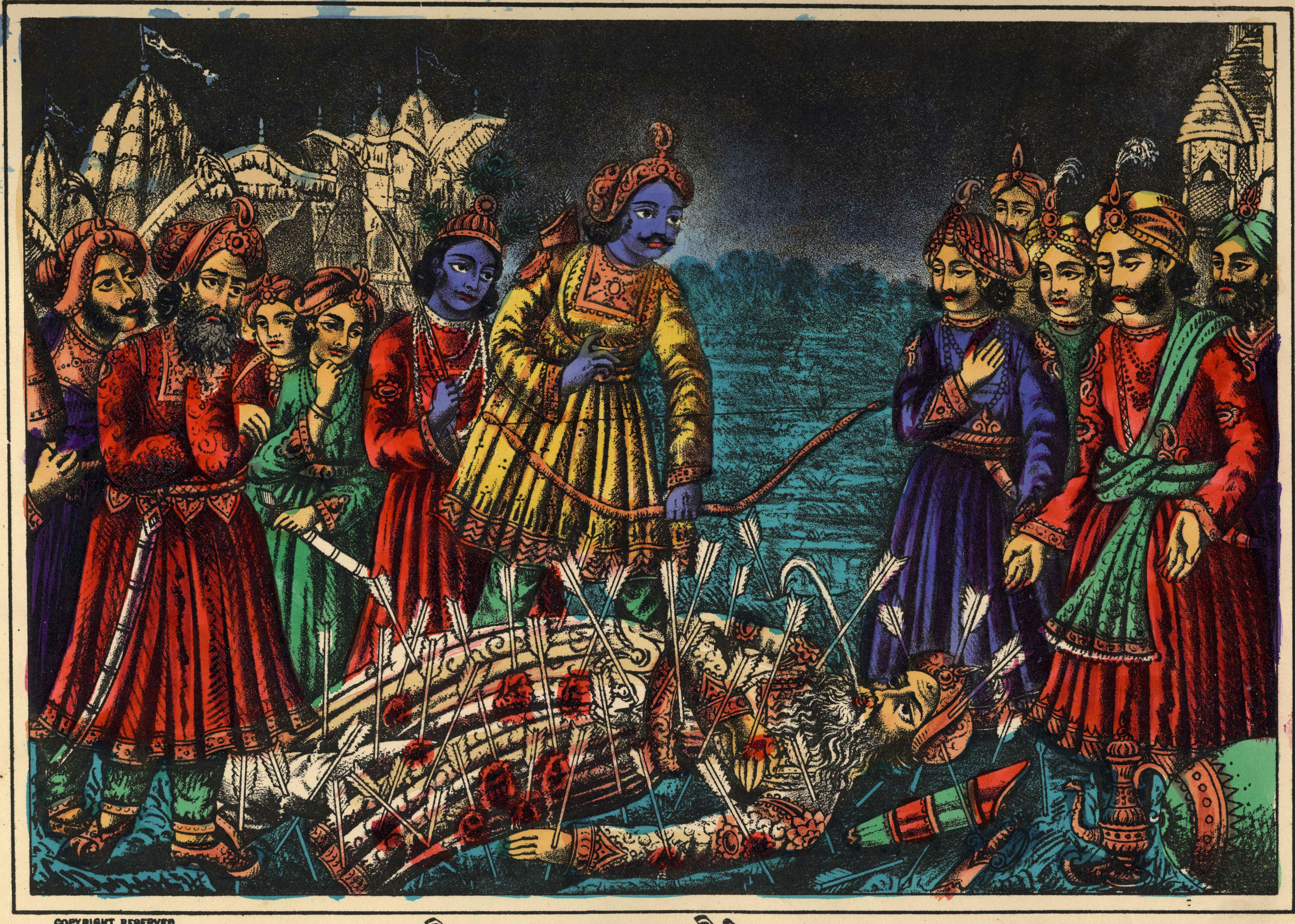
Among the rediscovered plays, some are particularly famous for their masterful execution of these bold themes. Urubhanga stands out for its heart-wrenching depiction of the final moments of the epic villain Duryodhana. Instead of portraying him as a one-dimensional antagonist, Bhasa transforms him into a tragic hero, focusing on his suffering and remorse in a powerful exploration of human fallibility.
Dutavakyam captures a tense and high-stakes confrontation between Lord Krishna, acting as a messenger, and the arrogant Kaurava court, building dramatic tension through sharp and concise dialogue. Perhaps most poignant is Pratima-nataka (The Statue Play), which explores the profound emotions of exile and family bonds through a clever narrative device. In the play, Bharata learns of his family’s fate by seeing statues of his deceased relatives in a temple, a powerful scene of revelation and grief that showcases Bhasa’s innovative approach to storytelling.
Bhasa’s legacy is immense and foundational. His rediscovery provided a crucial link in the history of Sanskrit drama, showing scholars the foundation upon which later, more stylized works were built. He proved that before the age of ornate poetry, there was a form of drama that was more direct, emotional, and intensely human. The mystery of the “lost poet” was solved, but his legacy continues to inspire, reminding us that some of the greatest treasures of history may still be waiting to be found and that true artistic brilliance can withstand the test of time.
The Mysterious Tale of Bhasa
Rediscovering a Lost Literary Giant of Ancient India
A Ghost in Literature
For centuries, the great poet Bhasa was a legend, praised by literary masters like Kalidasa. His name was synonymous with brilliance, yet his actual works were considered lost to time—a famous poet whose words had vanished.
Reputation vs. Reality
His fame survived through references in other texts, but for nearly two millennia, not a single one of his plays could be read or performed.
Plays Lost & Found
The Great Rediscovery of 1910
The story of Bhasa’s return to the world is as dramatic as his plays. It took a dedicated scholar to uncover a treasure hidden in plain sight, bridging a thousand-year gap in literary history.
~2nd-4th Century CE
Bhasa, the Mahakavi (Great Poet), composes his plays. His works are influential but eventually fade from public access, becoming literary legend.
1910 CE
Scholar T. Ganapati Sastri, searching a library in Kerala, discovers a bundle of palm-leaf manuscripts. He realizes they contain the 13 lost plays of Bhasa, electrifying the literary world.
A Dramatic Pioneer
Bhasa’s works revealed a style starkly different from the ornate dramas that came after him. His approach was direct, emotional, and broke established theatrical conventions, making him a true innovator.
This chart visualizes the stylistic differences, showing Bhasa’s focus on raw emotionality and simplicity compared to the emphasis on ornate language and strict rules in later classical drama.
A Glimpse Into His Masterpieces
Urubhanga
A heart-wrenching tragedy that depicts the final moments of the epic villain Duryodhana, turning him into a sympathetic, tragic hero.
Thematic Focus: Tragedy & Heroism
Dutavakyam
A tense one-act play capturing the dramatic confrontation between Lord Krishna as a messenger and the Kaurava court.
Thematic Focus: Conflict & Diplomacy
Pratima-nataka
“The Statue Play” explores powerful themes of family duty, exile, and recognition through a poignant and clever narrative device.
Thematic Focus: Family & Duty
An Enduring Legacy
The rediscovery of Bhasa’s plays was more than just finding old texts; it was finding a foundational pillar of Sanskrit drama. He showed a path of storytelling that was direct, human, and emotionally resonant.
Bhasa’s Foundational Work
(Direct, Emotional Drama)
A Crucial Link in History
(Bridging a Literary Gap)
Influence on Later Masters
(e.g., Kalidasa)